The Pocket Evidence Society: Why a Scrap of Paper Can Outshine a Perfect Journal
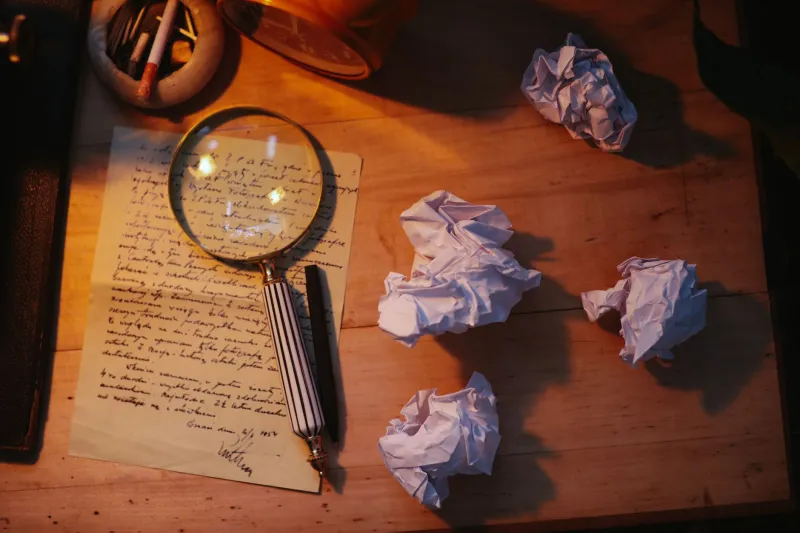
There is a particular kind of November evening when the flat feels darker than it should, the kettle is doing most of the emotional labour, and someone online is telling you to start a gratitude journal. Matching pen. Ribbon bookmark. A fresh page for a fresh you. Lovely in theory. Slightly exhausting in practice.
Here is a gentler idea: keep the receipts.
Not in a shoebox for your accountant. In an envelope by the door, or the back pocket of the coat you actually wear. A café receipt with a time stamp. A cinema stub from a rainy Tuesday. A bus ticket from the stop you rarely use. A Post-it from a colleague that says “thanks for sorting that”. A free postcard from an exhibition you wandered into because it was raining.
The habit is simple. Collect tiny bits of physical proof that ordinary life is already giving you something worth keeping. Then, once a week, tip them out and look.
The case for evidence over intentions
A gratitude journal asks you to sit down and generate good feelings on command. Some people love that. Many of us stare at the page, write “family, friends, tea”, and quietly close the notebook until March.
Evidence is different. It does not ask you to become a more disciplined person. It simply says: here is a thing that happened. Here is a scrap of paper that proves you left the house, met someone, laughed at something, or bought a very good cinnamon bun.
The bar is delightfully low. You do not need to feel grateful. You just need to notice that the day left a trace.
What counts as pocket evidence?
Almost anything small and real. The only rule is that it should be tied to a moment, not a shopping list. A receipt for milk is less interesting than the receipt from the café where you read three pages of a book in peace. A train ticket is ordinary. A train ticket from the day you finally visited that friend in Bristol is not.
Good candidates include:
- a cinema or theatre ticket stub
- a café receipt with the date on it
- a leaflet from a local exhibition or market
- a handwritten note, however scruffy
- a bus or train ticket from a day that went somewhere
- a coaster, sugar packet, or beer mat with a scribbled word on it
- a postcard you meant to send and did not
It does not need to be beautiful. In fact, scruffy is better. A crumpled receipt in a coat pocket feels like found evidence, not a craft project.
The five-minute weekly review
Pick a regular moment — Sunday morning with coffee, Thursday evening after dinner, whenever the week naturally pauses. Empty the envelope onto the kitchen table. Spread the bits out.
Then ask one question: what does this prove?
Not “what am I grateful for?” That can feel like a test. Ask what the scrap of paper is evidence of. A cinema stub might prove you chose the film nobody else wanted to see and loved it. A bus ticket might prove you took the scenic route home. A receipt might prove you sat in a café for forty minutes without looking at your phone.
If you want, write a single sentence on the back of the scrap. Not an essay. Just enough to jog the memory. Then put the best two or three back in the envelope, or move them to a small tin. Let the rest go. The point is not to build an archive. The point is to notice.
Why this works in the dark months
November compresses life. It gets dark at half past four, the commute becomes a tunnel between lamps, and by the time you get home the day can feel like it happened to someone else. The obvious risk is that you conclude nothing happened at all.
Pocket evidence quietly argues otherwise. It is not toxic positivity. It does not pretend a difficult day was secretly wonderful. It simply says: among the ordinary admin and the grey drizzle, there was also this. A good biscuit. A kind word. A forty-minute window where you felt like a person rather than a to-do list.
That is a useful thing to have on a dark Wednesday in November 2026, when the big light is too bright and the laptop is still open.
A very low bar, on purpose
This is not a scrapbook. There is no washi tape requirement. You do not need to buy anything, and you certainly do not need a fresh start. An old envelope will do. So will the back of a notebook you already own, or the pocket inside your bag.
If you miss a week, nothing bad happens. If the envelope stays empty for three days, fine. It is not a streak. It is a place to put small proof.
And if you already keep a gratitude journal, lovely. This can sit alongside it. But if the perfect notebook has been gathering dust since January, this is your permission slip to try something less polished and more doable.
How to make it stick
Attach the habit to something you already do. Emptying your pockets when you get home. Taking off your coat. Making the first cup of tea. Put the envelope where your hands already go.
Then keep the weekly review tiny. Five minutes, not fifty. A cup of tea, the scraps on the table, one question. If you want to make it feel a bit more like an occasion, light the second lamp rather than the big overhead one. That is the entire ceremony.
Start with today
Find an envelope. Write the date on the back. Put one thing in it — maybe the receipt from lunch, maybe the ticket from the bus you took because you could not face the Tube. Put the envelope by the kettle.
On Sunday, tip it out. You will probably find that the week was not empty after all. It was just made of small things that do not announce themselves. The scrap of paper is not the point. The noticing is.
And if the only thing in there is a receipt for a packet of custard creams, that still counts. It is proof of a Tuesday. Some weeks, that is more than enough.