The Drizzle Dividend: Ten Minutes Outside That Pays You Back All Evening
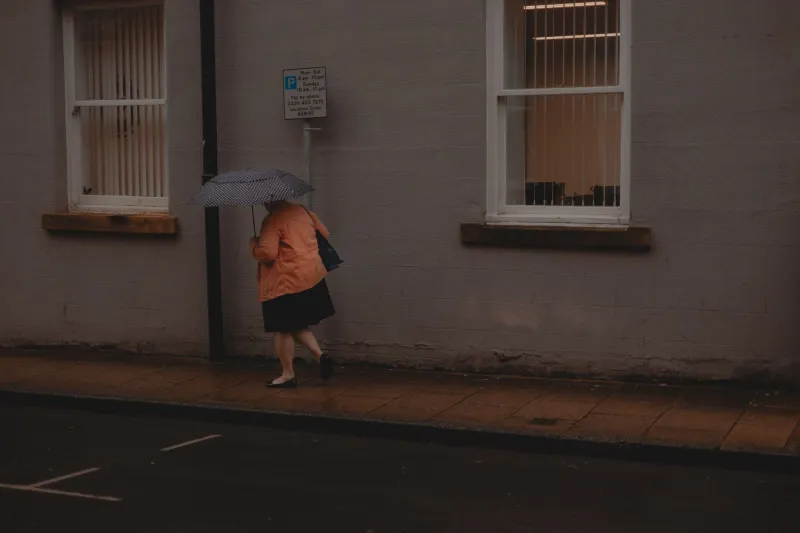
November has a reputation problem. By the second week, the default setting is indoors: big light on, phone in hand, another hour gone. The rain gives us a ready-made excuse, and it is a very good one. Nobody wants to arrive at the shop looking like a drowned hedgehog.
But here is a small, slightly damp counter-argument: ten minutes outside in the wet often does more for your mood than sixty minutes waiting for the weather to improve. Not because rain is magical, and not because you need to become the sort of person who posts sunrise swims. Because a short walk in ordinary British drizzle gives your brain three things a sofa cannot: daylight, movement, and a change of scene.
Why wet air works better than another hour on the sofa
Grey November light is still light. Even an overcast afternoon tells your body that the day is happening, which matters when sunset seems to arrive before the kettle has boiled. Add a bit of movement and a drop in temperature, and you get a gentle reset that costs nothing and requires no enthusiasm whatsoever.
The rain walk is not a fitness plan. Think of it as a mood errand. You are not trying to hit a step count or train for anything. You are stepping out of the indoor loop — the one where the radiator is too warm, the phone is too interesting, and the afternoon quietly disappears.
There is also the sensory side. Rain on a hood sounds different from rain on a window. Wet pavements smell different. Puddles turn the street into a wobbly mirror. These are tiny things, but they are new things, and new things are what your attention is hungry for after a day of the same four walls.
The under-£20 kit that makes it easy
The trick is not buying expedition gear. It is removing the friction. Keep a small wet-weather bag by the door so you can grab it without thinking.
A basic waterproof shell is the main event. Regatta, Mountain Warehouse and Decathlon all do lightweight hooded jackets in the £15–£20 range, especially outside peak season. Look for taped seams and a hood that actually stays up. It does not need to be breathable enough for a fell race. It needs to keep the worst of the weather off your shoulders for ten minutes.
Add a cheap pair of over-trousers or a poncho if you hate wet jeans. A reflective slap band costs a couple of pounds and makes you visible on darker streets. A small torch — a keyring one is fine — helps with unlit paths and kerbs. Wellies or an old pair of trainers are better than suede. And if you already own a flask, this is its moment.
The goal is not to look like a fell runner. The goal is to be dry enough that the rain stops being a reason to stay in.
Pick a loop, not an expedition
The best rain walk is short, familiar and lit. Ten minutes around your own streets, the edge of a park, or a loop to the corner shop and back is plenty. You are not heading into the wilderness. You are proving to yourself that the outside still exists.
Safety basics matter more in November, when dusk arrives in the middle of the afternoon. Wear something reflective or carry a torch. Keep your phone charged. Tell someone where you are going if you are heading somewhere quieter. Stick to pavements and well-drained paths, avoid flooded ground, and take wet leaves seriously — they are basically nature's ice rink. Keep headphones low or leave one ear free near roads.
And if the Met Office has named a storm or issued an amber warning, skip it. Cleverness includes knowing when the drizzle dividend is not worth it.
One small noticing task
A walk with no purpose can feel aimless, so give your brain a gentle job. This is not productivity. It is a scavenger hunt for your attention.
Try one of these:
- Count three different shades of grey in the sky.
- Find one thing that is still yellow, red or green.
- Listen for the change in sound when you walk under a tree.
- Spot three puddles that are doing a good job as mirrors.
- Count chimney pots, door numbers or bay windows on your loop.
- Notice one shop sign or street name you have never really looked at.
Pick one task only. The point is not to complete a challenge. The point is to come home with a small detail in your head instead of a vague sense that the day was grey and nothing happened.
The drying-off ritual
A wet walk works best when the return feels like a reward rather than a cleanup operation. Hang your jacket on a proper hook. Towel your hair. Stuff newspaper in damp boots if you have no boot dryer. Put the kettle on.
This tiny sequence matters. It turns the walk into a complete ritual — out, notice, return, warm up — rather than a damp interruption. Ten minutes outside, followed by a hot drink and dry socks, is a genuinely good November evening. It is certainly better than another hour of scrolling while the rain streaks the window.
Stop waiting for sunshine
In the UK, waiting for a dry day in November is a subscription to the sofa. The weather is not going to cooperate on a convenient schedule. There will be a bright crisp morning eventually, and you should absolutely go out in it. But you cannot bank your mood on it.
Accepting the rain is cleverer than resisting it. Put on the cheap jacket. Choose the familiar loop. Give yourself one small thing to notice. Come home, dry off, and let the evening feel earned.
Ten damp minutes is not a sacrifice. It is a small upgrade — the sort of thing that makes a grey Tuesday feel like you did something with it. And in November, that is worth a great deal.