The Tupperware Time Capsule: What One Spare Bowl on Friday Does for a Wet Tuesday

Photo by Photo by Gabriella Clare Marino on Unsplash on Unsplash
Tuesday evening has a reputation problem. It is not Monday, so it cannot even claim the drama of a fresh start, and it is nowhere near Friday. In November, with the clocks already back and the Christmas run-up gathering pace, Tuesday tends to arrive dark, drizzly and just busy enough to make cooking feel like a stretch.
This is where a spare ladle comes in. Not a meal-prep marathon, not a colour-coded spreadsheet, not a solemn vow to batch-cook every Sunday until 2028. Just one extra portion, made on Friday while you are already at the hob, labelled, frozen and left there like a tiny time capsule for the person you will be in four days.
The quiet economics of one extra portion
Most freezer advice starts with a chest freezer and ends with 14 identical containers. Ours starts with the pan you were already using. If you are making soup on Friday, leave one bowl's worth out before you serve. If it is a curry, spoon a portion into a tub before everyone sits down. If you are simmering a tomato sauce, decant a small jar while it is still hot and fragrant.
That is the whole trick. There is no extra shopping list and no additional chopping. You are simply stretching a meal you had already decided to cook. The cost is a few pence, maybe a pound if it is a meaty ragù. The payoff is a Tuesday evening where dinner is already in the building.
The freezer works best when you treat it less like a storage cupboard and more like a savings account. Each labelled portion is a small deposit. You will not notice it going in. You will absolutely notice it coming out.
What actually counts as a portion
A portion is one proper bowl or plate for one person. Not a vat. Not a hopeful iceberg of minced beef. If it fits comfortably in a standard takeaway tub or a decent soup container, you are in the right zone.
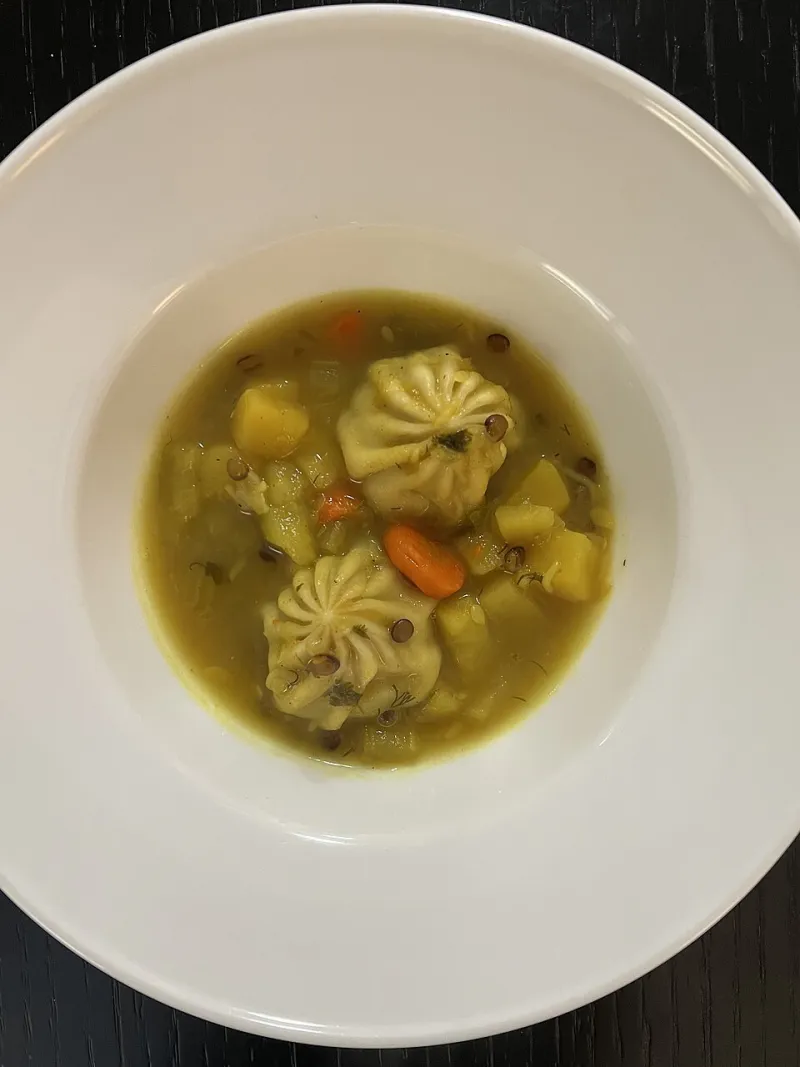
Good candidates include lentil and carrot soup, chickpea curry, chilli, mushroom ragù, pea and spinach soup, a simple dhal, or a tomato sauce that can later become pasta, pizza topping or a base for baked eggs. These are the kinds of things that freeze well, reheat reliably and do not demand a ceremonial defrosting schedule.
Some things are less obliging. Potatoes in soup can turn grainy. Pasta will drink up every drop of sauce and become a stodgy brick. Rice can be frozen safely, but it needs cooling quickly and reheating until piping hot, so if you are new to the freezer habit, start with soups, sauces and curries instead.
The label is the magic bit
The container matters less than the label. A strip of masking tape and a marker is enough. Write the date on one side. On the other, write a tiny note to future-you.
It can be as simple as: "Tuesday. Add yogurt." Or: "You are welcome." Or: "This is nicer than a Deliveroo." The note is not really about organisation. It is about tone. Opening the freezer after a long day and seeing a message in your own handwriting shifts something. It is not a chore waiting for you. It is a small favour, already done.
That is why the spare portion works better than a vague plan to "eat from the freezer". The date tells you it is safe. The note tells you it is kind.
Freezer-friendly favourites for a British kitchen
A few reliable standbys earn their shelf space:
- Lentil and carrot soup with cumin and a squeeze of lemon. Freezes beautifully and reheats in minutes.
- Chickpea and spinach curry. Make it a little thicker than you would eat fresh, as it loosens on reheating.
- Tomato and basil sauce. Freeze in smaller tubs so you can use it for a quick pasta or a midweek shakshuka.
- Chilli or ragù. Portion before adding a mountain of cheese or pasta.
- Pea and mint soup. Bright, cheap and surprisingly cheering in November.
Cool leftovers within a couple of hours, get them into the fridge and then the freezer, and reheat until steaming hot throughout. A little care here is what makes the habit feel genuinely useful rather than vaguely risky.
The Tuesday payoff
Come Tuesday, the scene is familiar. The bus is late, the sky is the colour of a wet flannel, and the idea of chopping an onion feels like a personal insult. This is the moment a takeaway app usually starts whispering.
Instead, there is a tub. You run it under warm water, tip it into a pan, and add something fresh: a spoon of yogurt, a handful of herbs, toast, oven chips, whatever is loitering in the fridge. Dinner is not glamorous. It is better than that. It is handled.
And because you are not desperately hungry by the time you start cooking, the takeaway temptation loses much of its power. One spare portion will not solve the entire national takeaway budget, but it does quietly interrupt the most expensive ten minutes of a Tuesday.
A habit, not a project
The beauty of the spare bowl is that it does not require consistency. You do not need to do it every Friday. You just need to do it when you are already cooking something that freezes well. One extra ladle, one label, one small deposit.
Over a few weeks, the freezer becomes a little library of past kindnesses. A soup from a Friday when you had energy. A curry from a night when you were organised for once. A sauce from a weekend when tomatoes were cheap. None of it is impressive in isolation. All of it is useful on a wet Tuesday.
So next time you are at the hob, leave one portion out before you serve. Let it cool, label it with the date and a daft little note, and put it away. Future-you will not send a thank-you card. But they will notice. And they will be very glad you did.